
 |||||||
|||||||
|||||||
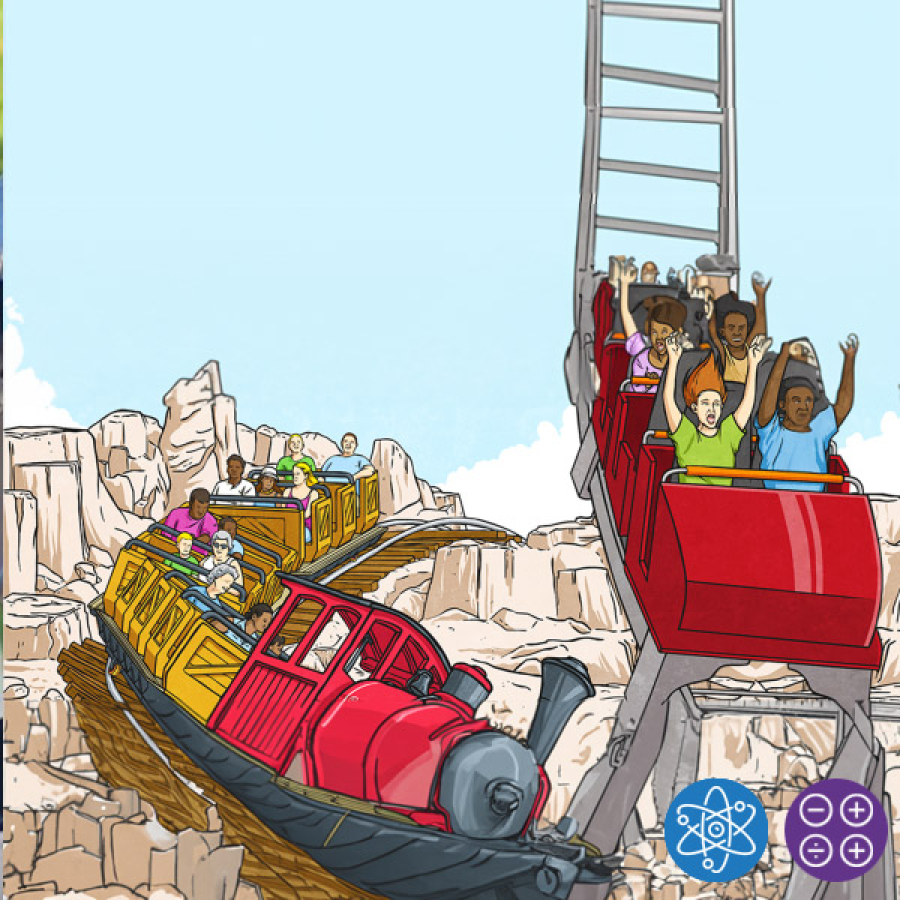
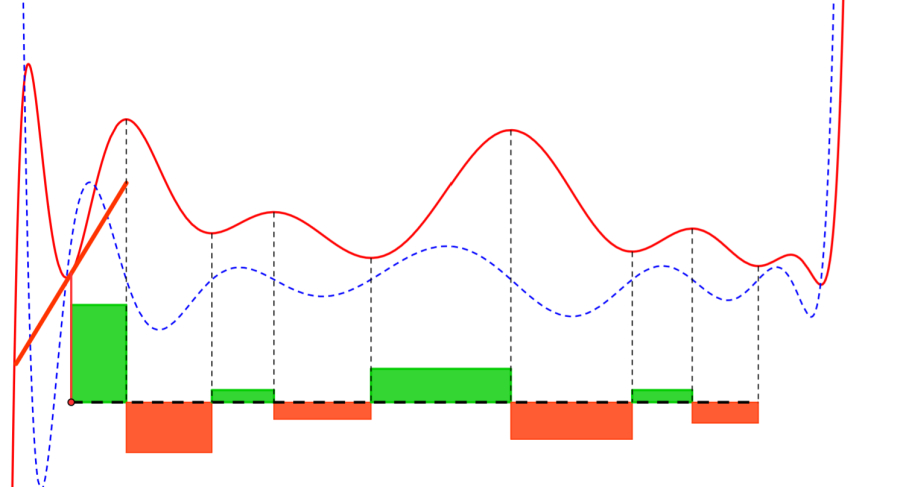
This project consists of designing a roller coaster, based on the law of conservation of energy and making a model to test its operation.
Download attachments:
- roller coaster exercises001.pdf (805 Downloads)
Additional Info
-
What you will learn:
- Science
- Calculating the potential and kinetic energy in each point of the roller coaster.
- Math
- Drawing functions, calculating derivatives of a function
-
Expected Time:
From 10 to 20 hours
-
Materials & Recycled Materials:
- - PLA (Recycled).
- - Sketching paper (Recycled)
-
Guide:
- 1. Roller coaster basics. Brain storming, basic internet research, to identify that, for example, roller coasters never have circular loops or that the first hill of the roller coaster must be the highest.
- 2. Exercises on physics. Exercises necessary to understand the operation of a roller coaster based on the conservation of energy. (attached in pdf)
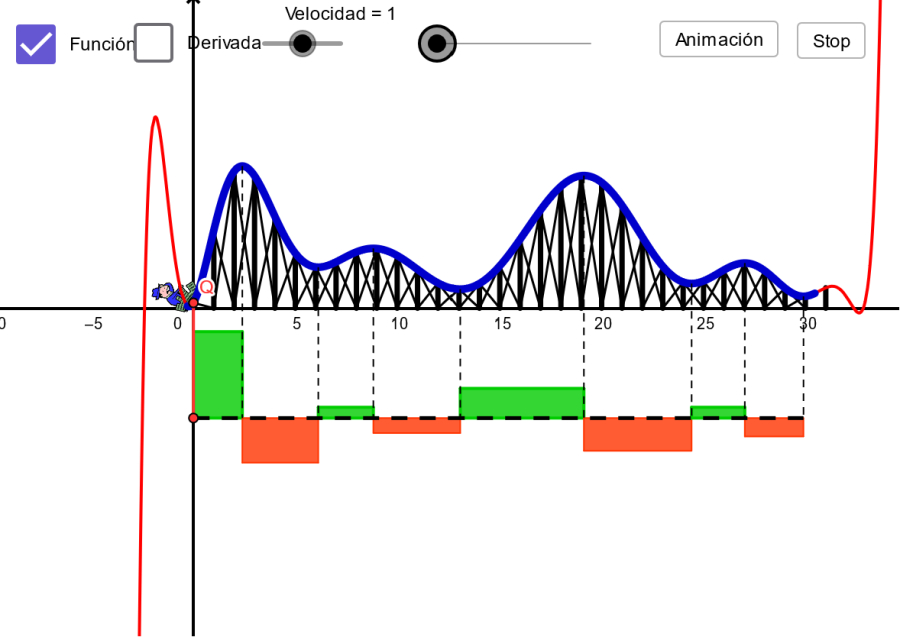
- 3. Sketch your roller coaster. To do so, imagine that you are taken to the top of the hill and that is where the ride starts. You will first sketch your design. Once you decide your design, draw your final design on a graph paper. You can use any types of functions: Sine, cosine, polynomial, linear, logarithm, or exponential. Include at least 2 different functions and, at least, 3 relative extrema. For your final design, you will have to take into account the connection between different functions, their continuity and their derivability.
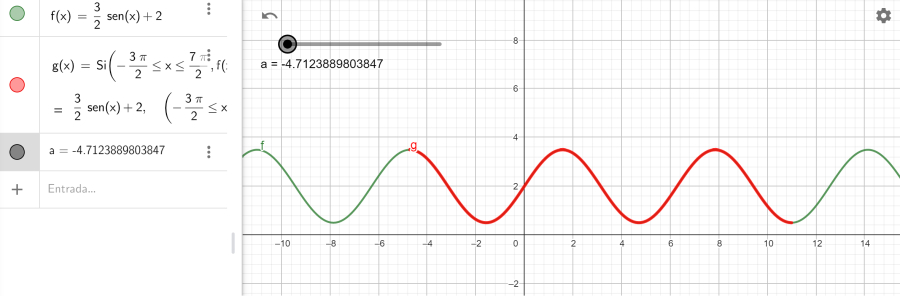
- 4. Draw your roller coaster in Geogebra and fix whatever is needed.
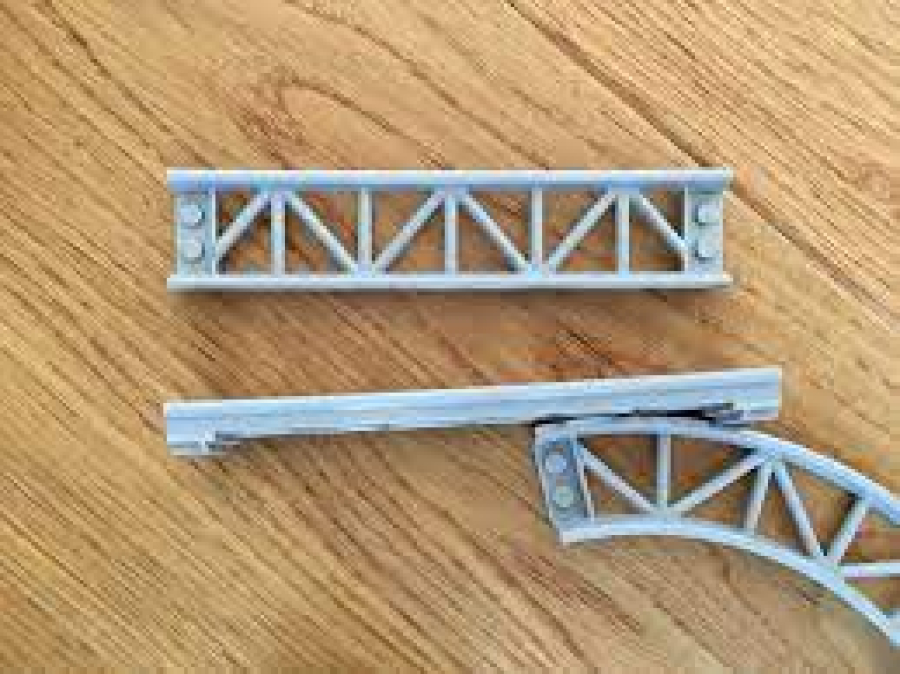
- 5. Make a model of your roller coaster using Onshape
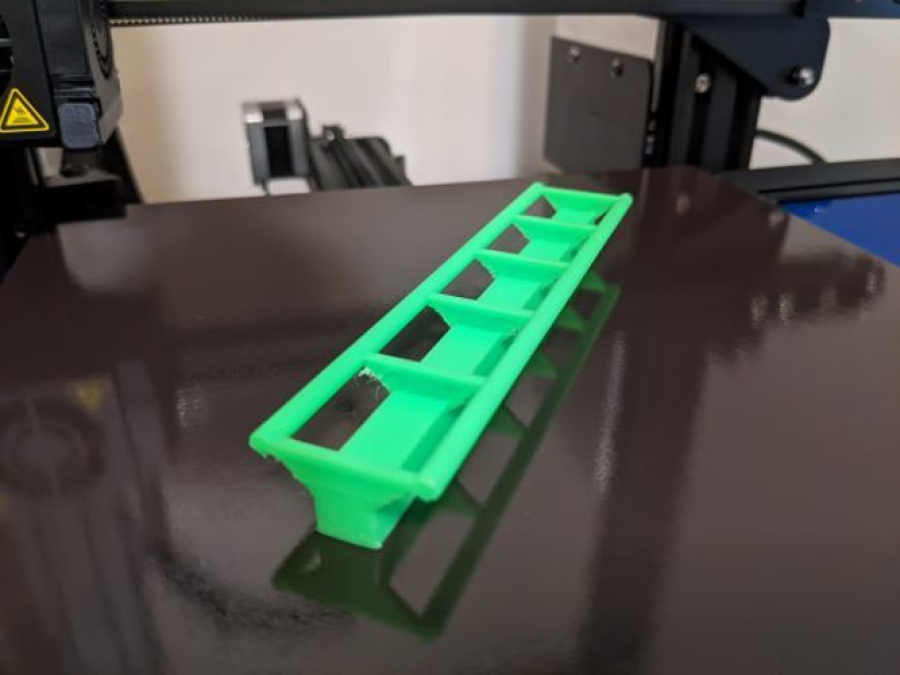
- 6. Print your model. First slice it with Ultimaker Cura or Prusa Slicer, then print it.
-
Further Steps:
- The roller coaster desing can be as complex as we want it to be, but the ideia would be to start calculating the weight of the train/carriages, of people, or the frictional force. Different and more complex functions can also be mixed, with loops, higher hills, etc.
- https://www.youtube.com/watch?v=6-tcPoucOfA (Spanish)
- https://www.aceonline.org/news/619042/NoLimits-The-Next-Best-Software-to-Real-Life-Coaster-Design.htm
-
External Links:
- Energy conservation: https://www.physicsclassroom.com/mmedia/energy/ce.cfm
- Why roller coaster loops are never circular: https://gizmodo.com/why-roller-coaster-loops-are-never-circular-1549063718
- How to design a roller coaster with Geogebra: https://www.youtube.com/watch?v=mRRBYs8gG54 (Spanish) https://www.youtube.com/watch?v=Q_KB0CauQ2w (English) https://www.youtube.com/watch?v=_lVXs8YIvRs (English)
- Geogebra example: https://www.geogebra.org/a/14?lang=es -ES https://www.geogebra.org/classroom/jzpuadbz#tasks/ZRytgvTW
- Onshape tutorial: https://www.youtube.com/watch?v=q1tiLwEI6uY&list=PLoPH28cIrLDbhIonaCsPcU2-dUCvCgHaS
-
Software used in the project:
- The aim of the project is to create a different design each time it is reproduces.
- The material needed to recreate it are the tasks about physics in the attached pdf (ROLLER COASTER EXERCISES 001.pdf) and the external links if needed
- Difficulty level: Hard
- Developed By: Politekinika Txorierri - ES
Media
No media available for this project
WARNING! If you add a comment you accept the privacy policy!